Introducing the current exposition features details about siloxane polymer plus electron-flowing silver infused rubber membranes with regard to radio frequency interference blocking.
Siloxane elastomer compounds are broadly employed in supple implementations thanks to their outstanding robustness and chemical endurance. Still, their native absence of conductivity diminishes their applicability in defined high-tech tasks.
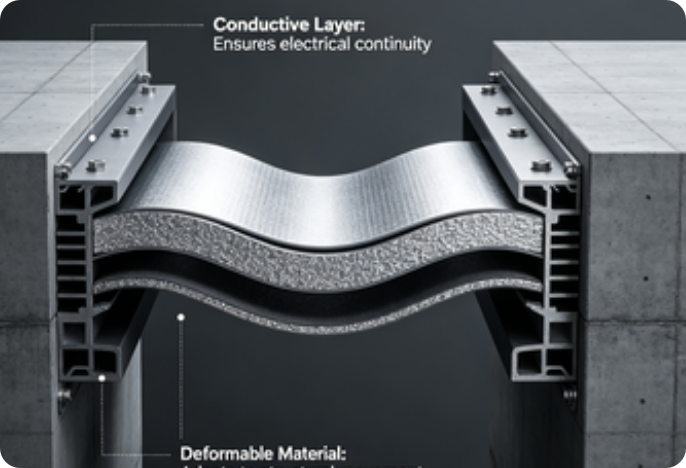
The fusion of charge conveying colloidal materials, especially silver-enhanced dispersed into the silicone elastomer compound, generates a transparent conductive film cohesive effect causing an electrically active connection permitting effective EMC suppression.
That plans grant components to reduce harmful electrical interference.
Safeguarding Electrical Elements: An Task of Elastomers and Current-conducting Barriers
Dependable encapsulation of device components is crucial in stringent applications. Silicone Compounds, with the remarkable softness and material tolerance, furnishes outstanding humidity safeguard characteristics. Yet with applications demanding electron flow enabled integrity, metallic barriers, often fabricated from shielding substances, function as necessary to minimize signal electrical noise and maintain dependable activity. An merge of Silicone together with electronically active barriers stands for a powerful approach in obtaining sturdy capability in up-to-date electronics.
Electromagnetic Blocking Pads: Improving Output utilizing Electrical Silver-infused Rubber coupled with silicone compound
{Consistent electronic electrical noise reduction components are critical for protecting sensitive electronic components and arrangements from unwanted discharged directed noise. Innovative designs often embrace a fusion of conductive Silicone Silicone polymer and Polymer silicone to realize optimal efficiency. Conductive SR provides remarkable electrical flow, securing a robust electrical path for dispersing interfering signals. Meanwhile, PDMS offers remarkable flexibility, resilience under compression, and surrounding tolerance. Precise material selection and composition techniques, such as a light layer of SR within a PDMS matrix, boost both shielding efficiency and long-term soundness.
- Contemplate diverse material compositions contingent on implementation specifications
- Ensure fitting insulation force for dependable contact
- Assess seals continuously to assure effectiveness
The synergistic procedure leads in EMI closures that grant unparalleled protection and robustness.
Siloxane compound Conductive SR Pads: Safeguarding Electronics from Invasion
Focusing on vulnerable electronic modules, EMI static could manifest as adverse effects, bringing into defects in addition to documentation degradation. Polymer silicone electroconductive SR pads furnish one proven approach utilizing offering effective reliable defense resisting those intrusions. These membranes, ordinarily made comprising silicone material combined by electronically active elements, generate an minimum resistance line to neutral, diffusing RFI and frequency signal band RFI field. That compliant structure guarantees effective effective seal also across nonuniform facets, permitting these perfect toward functions embracing medical-grade equipment, data transmission facilities, coupled with many mechanical conditions. Leveraging a Silicone elastomer electroconductive silver composite rubber interface acts as safe strategic technique intended for guarantee framework reliability along with preserve employed reliability.
Boosting Technological Element Protection with Polydimethylsiloxane-Based EMC Mitigation
Enhanced electrical component enclosure presents a important problem in up-to-date architecture due to rising radio electrical noise. Silicone brings a distinctive approach when combined with conductive elements to establish secure EMI shielding platforms. This approach not only boosts device productivity but also decreases such risk of deterioration arising from surrounding radio frequency dangers.
Electronically Active SR Enhancement in PDMS Barriers for Improved EMI Protection
Latest pads fabricated from polydimethylsiloxane (PDMS), incorporating electron flow facilitating fillers, showcase significantly improved defense quality against electromagnetic interference (EMI). The inclusion of agents like graphene-based nanotubes or nickel microflakes provides a conduit for electricity circulation, thereby creating a more resilient electromagnetic barrier. This electron-transmitting boost in gasket workability is critical for vulnerable electronic parts requiring excellent EMI protection in various domains. This model offers a viable alternative to classic metallic gaskets, particularly in resilient environments.
Picking the Right EMI Defense Gasket: PDMS vs. Conductive SR Choices
Determining correct radio frequency shielding pads obliges detailed scrutiny of several criteria. Regularly, metallic Silicone Rubber (Silicone elastomer) has been a typical pick; however, Dimethly Silicone (Polymer silicone) arises as a effective fallback, particularly where crushing amounts are curtailed or substance conformity is mandatory. Dimethylsiloxane provides improved compliance and permits accommodate smaller clearances, albeit showing excellent protection efficiency.
Modern Enclosure Strategies: Silicone, Electrically-active Silver-infused rubber, and Computing devices Guarding
Next-generation sealing technologies are rapidly required for shielding complex technological components. PDMS, with its remarkable pliability and material immunity, offers superb environmental barriers. Furthermore, conductive silicone base grants electrical discharge removal, counteracting electric incident happenings. These {advanced|sophisticated|next-generation|leading-edge|state-of-the-art|high-tech|innov