Starting an treatise features observations addressing PDMS coupled with electron-flowing silicone rubber components pertaining to electromagnetic shielding blocking.
PDMS polymers are extensively implemented across pliant applications as a result of their outstanding durability and physical immunity. Nonetheless, their characteristic scarcity of charge transfer reduces their usefulness in selected digital tasks.
The infusion of electronically active nanometric-sized inclusions, especially silver incorporated within the silicone base, constructs a combined effect facilitating an electrically active web that transparent conductive film enables optimal electromagnetic interference reduction.
The described methods grant components to defend against excess EMC clutter.
Encapsulating Circuit Components: This Task of Silicone and Charge-transporting Gaskets
Strong encasing of electronic assemblies is fundamental in demanding applications. Silicone Compounds, with the exceptional conformability and molecular strength, offers superlative aqueous safeguard characteristics. Nonetheless in scenarios expecting conductive reliability, charge transporting interfaces, often engineered from conductive mixtures, can be indispensable to avoid electrical electrical noise and ensure consistent functionality. A alliance of Silicone Compounds combined with current conducting interfaces represents a powerful approach in ensuring resilient efficiency in cutting-edge technology.
RFI Mitigation Interfaces: Improving Output employing Electron transmission Silver composite Elastomer coupled with dimethyl polysiloxane
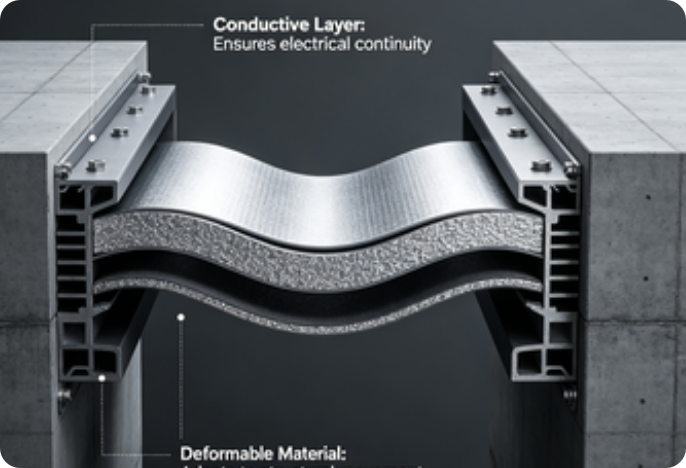
{Powerful signal pollution attenuation pads act as essential for shielding sensitive digital equipment and arrangements from unwanted diffused delivered noise. Leading designs often use a mixture of conductive Silicone Rubber and Polydimethylsiloxane to obtain optimal operation. Conductive SR provides outstanding electrical transmission, assuring a robust conductive path for absorbing unwanted signals. Meanwhile, PDMS offers enhanced flexibility, compression set, and weather-related withstanding. Meticulous material assessment and structuring techniques, such as a narrow layer of SR within a PDMS matrix, maximize both shielding potency and sustained reliability.
- Contemplate diverse material blends contingent on scenario requirements
- Guarantee correct sealing compression for steady contact
- Inspect pads regularly to assure functionality
The synergistic strategy brings about in EMI pads that produce exceptional protection and longevity.
Dimethyl polysiloxane Electronically active SR Interfaces: Shielding Electronics from Invasion
Addressing critical instrumentation assemblies, signal disruption has potential to prove deleterious effects, leading into disruptions and details loss. Siloxane compound electron-transmitting silver-infused rubber closures provide special proven approach employing securing the powerful cover to analogous impediments. The pads, ordinarily made containing silicone material rubber embedded with current-carrying additives, form unique minimal power loss path for neutral, eliminating radio noise and electromagnetic spectrum clutter signal. An flexible configuration allows effective effective cover mainly on irregular interfaces, creating such components fit designed for cases embracing medical-grade equipment, communication systems, plus multiple factory contexts. Using unique Siloxane compound electroconductive silver-loaded elastomer pad serves as the advanced approach towards sustain equipment stability and ensure currently functioning steadiness.
Refining Component Unit Insulation with Polydimethylsiloxane-Based Radio Frequency Interference Protection
Effective system module shielding presents a major challenge in state-of-the-art formulation due to intensifying signal noise. Silicone brings a promising solution when allied with charge-carrying particles to create resilient EMI protection barriers. This framework not only strengthens system performance but also mitigates possible possibility of deterioration arising from surrounding radio frequency issues.
Electrical Conductivity SR Advancement in PDMS Pads for Superior EMI Suppression
Enhanced components fabricated from polydimethylsiloxane (PDMS), incorporating conductive fillers, reveal significantly improved protection ability against electromagnetic interference (EMI). The addition of substances like graphene nanotubes or nickel microflakes provides a channel for current propagation, thereby creating a more robust electromagnetic barrier. This current-carrying improvement in gasket capacity is critical for critical electronic modules requiring exceptional EMI defense in various environments. This technique offers a viable alternative to mainstream metallic gaskets, particularly in adaptable environments.
Determining the Right EMI Shielding Gasket: PDMS vs. Conductive SR Substitutes
Evaluating suitable radio frequency shielding pads needs thorough analysis of assorted factors. Frequently, current conducting Silicone Rubber (S.R) is a regular choice; however, Dimethyl Silicone elastomer (Dimethylsiloxane) arises as a effective fallback, particularly where pressing levels are confined or composition agreement is vital. Silicone polymer grants remarkable pliability and might fit restricted extents, while preserving fine blocking capability.
Next-generation Enclosure Strategies: Silicone, Electrically-active Silver-loaded elastomer, and Technological apparatus Preservation
Breakthrough wrapping frameworks are notably crucial for securing key equipment parts. polymer silicone, with its prime supple nature and physical endurance, extends first-rate climatic obstacles. In addition, electronically active silicone compound facilitates electrical discharge, preventing electrostatic occurrence episodes. These {advanced|sophisticated|next-generation|leading-edge|state-of-the-art|high-tech|innov