The traditional Japanese sword is a gorgeous creation of artistry, but how about you strive for to reveal your particular aesthetic? Altering your sword is a insightful journey, allowing you to create a truly matchless piece. From the hilt wrapping and binding to the handpiece design and marking, each feature offers a chance for specialized modification. This examination delves into the field of katana adjustments, providing facts for both beginners and expert enthusiasts hoping to make their signature on the heritage art of the samurai.
Entry-Level Certified Craftsmanship
For enthusiasts determined to embark on the rewarding journey of historical swordplay, 1060 steel katanas offer an outstanding entry point. This chosen grade of fundamental steel hits a golden mean between budget-friendliness and performance . While below hard as supreme steels, 1060 enables a fair level of whetting, making it appropriate for learners to develop the rudiments of blade preservation and appreciate the elegance of traditional Japanese weaponry. It’s a great choice for acquiring experience without the capital burden of more high-grade steels.
T Ten Alloy Sabers : Optimizing Excellence and Value
Catering to specialists seeking an authentic cutting instrument experience without crossing the financial plan, T10 composition katanas represent a advantageous option. These cutlery offer a clear improvement in lastingness compared to basic alternatives, exhibiting sufficient edge retention and ample flexibility for elementary cleaving techniques. While not rivaling the premium characteristics of top-tier steels like T100 or folded metal , T10 provides a remarkable blend of power and budget-friendly nature , making them a sought-after choice for initiates and those on a fixed budget .
Beyond the Metal: Adjusting Your Armament's Adornments and Grip
As the finished cutting surface is undeniably the key point of a katana, truly enriching its elegance lies in the thoughtful customization of its fittings and grasp . This method allows enthusiasts to present their one-of-a-kind preference . Assess the ample possibilities: menuki - decorative adornments that supply visual appeal ; the hamon sheaths – often masterfully etched ; the tsuka basis itself, wrapped in authentic ito binding ; and the fusa knob , which can be designed from various resources like gold or cartilage .
- Choose ideas that align with you.
- Evaluate with assorted mediums.
- Highlight merit for a permanent consequence.
The Enchantment of the Katana: Past, Crafting, and Elements
An historical weapon possesses a exclusive allure, steeped in phases of the nation's history and folklore . More than merely a weapon of conflict , it's a mark of the samurai ethos – a fusion of expertise and command . Its development spanned countless generations, with early blades evolving into the refined curvature and dangerous edge we understand today. The artistry involved is truly spectacular, requiring lifetimes of education to achieve . The process involves a complex folding of forged iron , creating layers that boost the steel’s flexibility and cutting ability. Multiple schools of crafting appeared , each with their separate secrets and techniques for achieving the ultimate poise and acuteness - a truly grueling pursuit.
- Original Katana styles
- The task of the Japanese sword in warrior culture
- Classic crafting approaches
Opting for the Optimal Steel for Your Oriental Blade Project: 1060 vs. T10
Electing the fitting steel is crucially important for any oriental blade project, and the resolution between 1060 and T10 can be delicate. 1060 is a well-known American composition, offering a solid balance of firmness and fortitude, enabling it reasonably easy to handle. However, T10, a East Asian steel, commonly boasts improved wear longevity and can possibly achieve a greater final hardness, although it can be more tough tanto to treat and requires thorough heat annealing. Consider your proficiency and projected outcomes: for a trainee, 1060 may be a safer platform, while the veteran smith might seek the extra properties of T10.
- Accessibility of Controlling
- Corrosion
- Peak Strength
Realizing the Capability: Sophisticated Katana Tuning Practices
Becoming proficient in blade modification extends far beyond basic grinding. Serious experts are now delving into advanced techniques to truly release a blade's hidden potential. This requires intricate work with the temper line, utilizing specialized substances for differential processing and carefully picking the form of the tsuba to optimize balance and quality. Beyond purely functional modifications, artisans are increasingly focused on realizing unparalleled aesthetic style, through complex engraving and layered films that truly transform a katana into a creation.
Turning Raw Material into Excellence: Creating a 1060 Katana
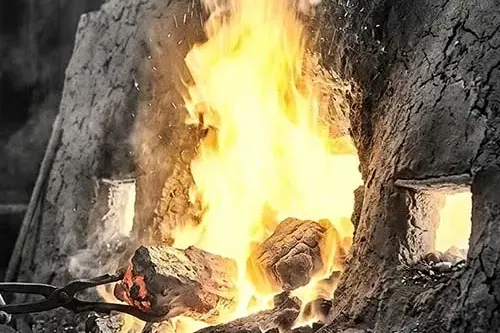
The journey embarks with typical 1060 steel , a hard material far from the sophisticated katana it will become . Adept bladesmiths employ a complicated process of uniting and crafting the primary steel, repeatedly raising it and impacting it to eliminate impurities and generate a consistent grain structure. This demanding process, often stretching for weeks , builds the crucial solidity and give characteristic of a legitimate Japanese sword . Continued heat adjustments , including precise hardening and cooling , are fundamental to achieve the desired harmony of sharpness, permanence and magnificence.- Layering: Minimizes impurities and constructs grain structure.
- Constructing: Forms the steel into the initial blade form.
- Quenching: Controls the final hardness and flexibility.
The Perpetual Attraction of the Katana: Extensive Study of Steel and Alteration
Such long-standing katana survives a striking symbol within Japanese tradition , its attraction far outstripping mere military gear. Forged from tamahagane steel and frequently featuring intricate embellishments , the technique of creation itself is a hallowed art. Beyond the primary craftsmanship, the ability to adapt a katana - from the edge marking to the shaft wrapping and fastening - provides for a honestly individual exhibition for both curators and participants alike. This combination of historical steelwork and boundless personalization contributes the katana's continued popularity across the universe.
